


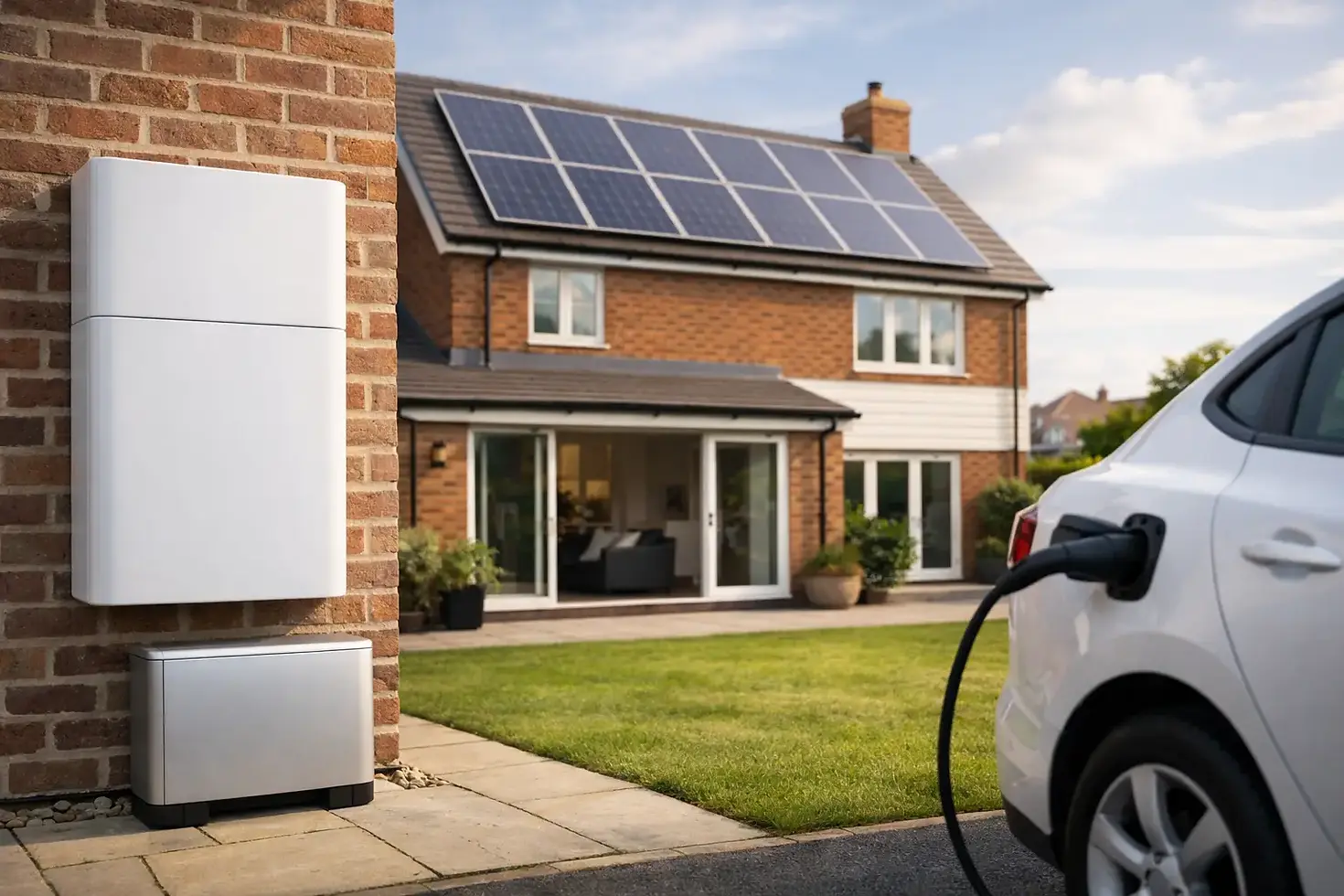
Best Home Battery Systems for UK Homes

If your electricity bills have become less predictable and you are already thinking about solar, the best home battery systems can make a noticeable difference. A well-matched battery helps you store cheaper or self-generated electricity and use it when your home needs it most, rather than buying more from the grid at peak times. That sounds simple, but choosing the right setup depends on how your household actually uses energy.
For some homes, battery storage is mainly about getting more value from roof solar panels. For others, it is about backup during outages, reducing reliance on the grid, or preparing for a heat pump and higher electric demand. The right answer is rarely the biggest battery on the market. It is the system that fits your property, your usage, and your plans over the next few years.
What makes the best home battery systems?
The best home battery systems are not defined by one brand name or one headline figure. In practice, the best option is the one that balances usable storage, charging and discharge speed, lifespan, control features, and compatibility with the rest of your home energy setup.
Battery capacity is usually the first thing people look at, and understandably so. Measured in kilowatt-hours, it tells you how much electricity the battery can store. But a 5 kWh battery and a 10 kWh battery are not automatically better or worse than each other. A smaller battery may be ideal for a home with modest evening usage, while a larger one may suit a family home with solar panels, an electric vehicle, or a heat pump.
Usable capacity matters just as much as stated capacity. Some batteries allow most of their stored energy to be used, while others keep a larger reserve to protect battery health. That difference affects what you actually get day to day.
Then there is power output. This tells you how much electricity the battery can supply at once. If your home wants to run the oven, kettle, lighting and a few background appliances at the same time, low output can become a limitation even if the battery has plenty of stored energy.
Battery storage works best when it is designed around your home
This is where many buying guides become too generic. Two households in similar sized homes can have very different energy profiles. One may be empty during the day and use most electricity in the evening. Another may work from home, run appliances throughout the day and already have solar generation covering some of that demand.
That is why proper system design matters. A battery should not be chosen in isolation. The inverter, your consumer unit, any existing solar system, export tariff arrangements and future upgrades all need to be considered together.
If you are planning to add solar later, it makes sense to think ahead now. If you already have solar installed, the choice may come down to whether your battery can be AC-coupled into the current setup or whether a hybrid inverter would give better long-term value. Neither route is universally better. It depends on what is already in place and how much disruption you want during installation.
The features worth paying attention to
A good battery system should do more than store electricity. It should give you useful control over when and how that electricity is used.
Smart tariff compatibility is one of the most valuable features for UK homeowners. Some systems can charge overnight when electricity is cheaper and discharge during expensive peak periods. That can improve savings even in winter, when solar generation is lower.
App control is another feature that sounds like a nice extra but often becomes genuinely useful. Clear monitoring helps you understand generation, usage and stored energy in plain terms. You do not need pages of technical data, but you do need visibility. If a system is hard to understand, it is harder to get the best from it.
Backup capability is worth checking carefully. Not every battery provides power during a grid outage, and those that do may require extra hardware or only support selected circuits. If backup matters to you, especially in a home where heating controls, refrigeration or home working are important, this should be part of the design from the start.
Warranty and expected cycle life also deserve attention. A long warranty is reassuring, but it helps to look at the conditions behind it. Some are based on years, some on throughput, and some on both. The strongest systems tend to combine a solid warranty with a proven chemistry and sensible operating limits.
Are bigger batteries always better?
Usually not. Oversizing is one of the easiest ways to spend more than you need to.
A battery that is too small may fill and empty too quickly, limiting savings. A battery that is too large may rarely be used to its full potential, especially in homes without high demand or enough solar generation to keep it charged. In that case, you are paying for storage capacity that sits idle for much of the year.
For many households, the sweet spot is a system sized around evening and overnight demand rather than total daily consumption. If your solar panels regularly export energy during the day, a battery can capture more of that surplus. If they do not, then a very large battery may not deliver proportionate value unless you are charging it on an off-peak tariff.
The best approach is to look at real usage patterns rather than assumptions. Smart meter data, seasonal changes, and any future plans should all shape the decision.
How solar panels and battery storage work together
If you already have solar, battery storage often makes the system far more useful. Instead of exporting excess generation in the afternoon and importing electricity in the evening, you store more of what you produce and use it later.
That does not mean export tariffs are irrelevant. In some cases, exporting can still make sense financially at certain times. The key point is flexibility. A good system allows you to make better use of your own electricity while still responding to tariff changes.
For households considering a wider move towards low-carbon living, battery storage also complements heat pumps well. Heat pumps can increase electricity consumption, but they also work best as part of a well-planned system. Combining solar, battery storage and efficient heating can reduce running costs and make energy use more predictable.
What UK homeowners should ask before choosing a system
Before comparing brands, it helps to ask a few practical questions. What problem are you trying to solve? Lower bills, better use of solar, backup power, or future-proofing for other upgrades all point towards slightly different priorities.
You should also ask how expandable the system is. Some battery ranges allow extra modules to be added later, which can be useful if your needs change. Others are more fixed from the outset. Expandability is valuable, but only if it comes with reliable integration and sensible costs.
Installation standards matter just as much as product quality. Even the strongest battery on paper will disappoint if it is fitted poorly, commissioned badly, or paired with the wrong components. For homeowners, that is often the biggest difference between a smooth long-term investment and an expensive frustration.
This is where working with an experienced local installer helps. A proper home survey, clear explanation of options, and ongoing support after installation matter far more than glossy marketing claims. For homeowners across the South Coast, that reassurance is often just as important as the technical specification.
So, which system is best?
The honest answer is that there is no single best home battery system for every property. There are strong products on the market, but the best result comes from matching the right battery to the right home.
If you want straightforward savings from solar, a modest, efficient system may be ideal. If you want greater independence from the grid, backup support and room for future expansion, a more capable setup may be worth the extra cost. And if you are planning a wider upgrade that includes solar panels or a heat pump, battery storage should be considered as part of the whole design, not as an afterthought.
For most homeowners, the smartest first step is not choosing a brand. It is understanding your usage, your goals and the kind of support you want after installation. Once those are clear, the right battery system becomes much easier to identify.
A good battery should make your home feel more efficient, more resilient and easier to run. If it does that quietly in the background, while giving you confidence that the system has been properly designed for your home, you are looking in the right direction.


Comments