


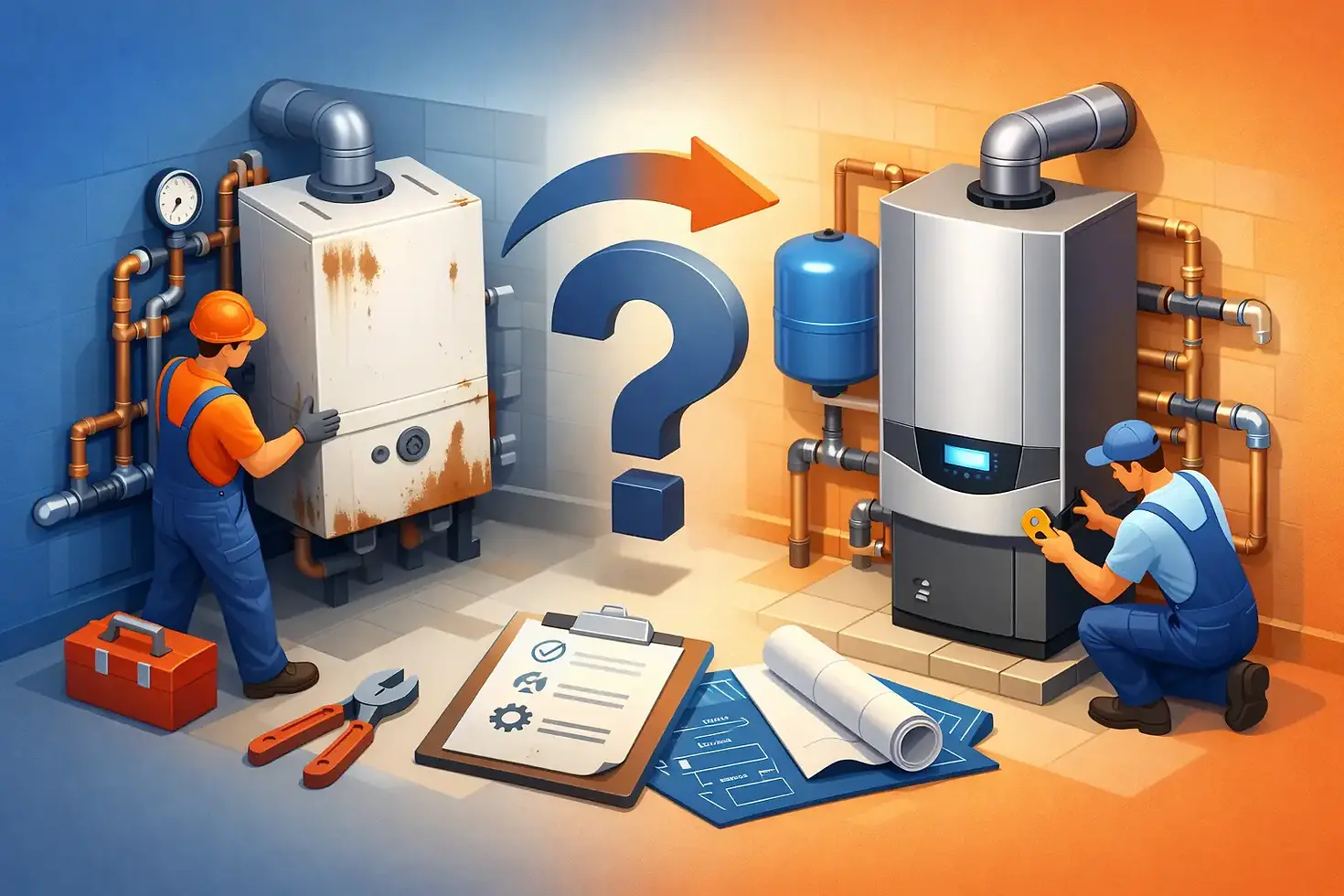
What Is Boiler Replacement and When to Do It

A boiler rarely fails at a convenient time. It tends to happen when the weather turns, the hot water goes lukewarm, or the repair bill starts sounding far too close to the price of a new system. That is usually when homeowners start asking: what is boiler replacement, and do I actually need it?
Put simply, boiler replacement means removing an existing boiler and installing a new one in its place. Sometimes that is a like-for-like swap. In other cases, it involves changing the type of boiler, upgrading controls, improving pipework, or making changes to the wider heating system so everything works more efficiently and reliably.
For most households, boiler replacement is not just about getting the heating back on. It is about improving comfort, reducing the risk of breakdowns, and making sure your home has a heating system that suits how you actually live.
What is boiler replacement in practical terms?
When people hear the phrase, they often imagine an engineer taking one boiler off the wall and fitting another. That can happen, but a proper boiler replacement is usually a little more considered than that.
A good installation starts with assessing the current system. The engineer will look at the age and condition of the existing boiler, the number of bathrooms, hot water demand, radiator performance, flue position, controls, and whether the boiler output is right for the property. If the old system has been badly sized or poorly designed, replacing it with the same setup may not be the best answer.
That is why boiler replacement often includes related work such as a system flush, new filter, upgraded thermostat, condensate pipe changes, or adjustments to the pipe layout. The aim is not only to fit a new appliance, but to make sure the whole system performs properly.
When a boiler replacement makes sense
There is no single age at which every boiler should be replaced. Some older boilers keep going for years, while others become unreliable much sooner. What matters is the balance between performance, repair costs, efficiency, and peace of mind.
If your boiler is breaking down regularly, parts are becoming difficult to source, or your energy bills seem high for the amount of heating you use, replacement may be the more sensible long-term option. The same applies if your boiler is no longer meeting your household's needs. A growing family, an extra bathroom, or poor hot water pressure can all be signs that the current setup is no longer the right fit.
Another common trigger is repeated repair spend. One repair on its own does not always justify replacing a boiler. But if you are paying for call-outs every winter and still worrying whether it will last another season, it is worth stepping back and looking at the bigger picture.
Signs your old boiler may be nearing the end
Some warning signs are obvious. No heating, no hot water, leaks, strange noises, and low pressure all point to a system that needs attention. Others are more gradual.
You may notice your radiators take longer to warm up, your boiler cycles on and off more often, or the temperature in the house feels less consistent than it used to. Sometimes the issue is not the boiler alone, but the wider system. Even so, an ageing boiler at the centre of it can still be part of the problem.
Visible wear, corrosion, unreliable ignition, and rising repair frequency are also common indicators. If your installer is starting to mention obsolete components or limited manufacturer support, it is usually a sign that keeping the boiler going may become more expensive and less practical.
What happens during a boiler replacement?
The exact process depends on the property and the type of boiler being installed, but most replacements follow a similar pattern.
First comes the survey and specification. This is where your installer checks what your home needs rather than simply quoting for the cheapest unit available. That matters because an undersized boiler can struggle, while an oversized one can be inefficient and wear unnecessarily.
On installation day, the old boiler is removed safely. The new boiler is fitted, connected, and tested. If needed, the system may be cleaned to remove sludge and debris that could damage the new appliance. Controls are set up, safety checks are completed, and the installer should explain how to use the system properly.
A straightforward combi-to-combi replacement may be completed relatively quickly. A change from a regular or system boiler to a combi, or a relocation to a different part of the house, can take longer because it involves more pipework and design changes.
Choosing the right type of new boiler
One of the most important parts of boiler replacement is choosing the right boiler type. For UK homes, the main options are usually combi, system, and regular boilers.
A combi boiler heats water on demand and does not need a separate hot water cylinder. It works well in many smaller and medium-sized homes where space matters and hot water demand is moderate.
A system boiler uses a hot water cylinder, which can make it a better choice for homes with higher demand, especially where more than one bathroom may be used at once. A regular boiler is often found in older heating setups with tanks in the loft and a cylinder elsewhere in the house.
There is no universal best option. A combi is not automatically the right answer for every property, and keeping a stored hot water system can sometimes be the better route. The best outcome usually comes from matching the boiler to the home, not the other way around.
Boiler replacement and energy efficiency
For many homeowners, one of the biggest reasons to replace a boiler is efficiency. Older boilers, particularly ageing non-condensing models, can use more fuel than modern equivalents to deliver the same level of heating and hot water.
A new boiler will not solve every issue with high energy bills. Poor insulation, outdated controls, and inefficient habits all play a part. But a well-specified modern boiler, installed correctly and paired with suitable controls, can improve efficiency and help you manage energy use more effectively.
This is also where it helps to think beyond the boiler itself. Smart controls, zoning, weather compensation, and good system design can all influence performance. In some homes, it is also worth considering whether a heat pump or a wider renewable upgrade makes more sense over time. It depends on the property, the budget, and your longer-term plans.
How much does boiler replacement cost?
Cost varies depending on the boiler brand, output, warranty, complexity of the install, and whether extra work is needed. A straightforward replacement will usually cost less than a full system redesign or a conversion from one boiler type to another.
It is tempting to focus on the lowest quote, but that can be misleading. A cheaper installation may leave out essential system cleaning, quality controls, or upgrades that protect the new boiler. A well-installed boiler is not just about the appliance itself. It is about reliability, efficiency, safety, and aftercare.
When comparing quotes, it helps to ask what is actually included. Look at the warranty length, controls, filter, flushing method, commissioning, and support after installation. Those details often make the difference between short-term savings and long-term value.
Why installation quality matters as much as the boiler
A quality boiler fitted badly can still cause problems. Poor sizing, incorrect pipework, inadequate flushing, and rushed commissioning can all affect performance and lifespan.
That is why choosing the right installer matters so much. You want someone who will assess your home properly, explain your options clearly, and stand behind the work after the installation is complete. For homeowners across the South Coast, that local accountability often matters just as much as the badge on the front of the boiler.
If you are comparing local installers, look for accreditation, clear communication, and a willingness to talk through what is right for your home rather than pushing a one-size-fits-all answer. The best advice is usually the advice that takes your property, budget, and future plans into account.
What is boiler replacement really about?
At its core, boiler replacement is about more than swapping old equipment for new. It is about restoring confidence in your heating and hot water, improving day-to-day comfort, and making sure your home has a system you can rely on.
For some households, that means replacing an unreliable boiler before it fails completely. For others, it means taking the opportunity to improve efficiency, free up space, or prepare for a more modern energy setup. If you are unsure whether repair or replacement is the better route, honest advice from a trusted heating specialist will usually save you money and stress in the long run.
A good heating system should not be something you worry about every time the temperature drops. It should simply work, quietly and efficiently, in the background of daily life.


Comments