
A small puddle beneath the boiler can feel easy to dismiss, particularly when the heating and hot water still seem to work. Yet the top signs of boiler leaks are often subtle at first, and acting early can prevent water damage, pressure problems and an unexpected loss of heating. For homeowners, the safest approach is to recognise the warning signs, make a few simple observations and arrange help before a minor fault becomes a larger repair.
What counts as a boiler leak?
A boiler leak is water escaping from the boiler itself, its pipework or a connected component such as a pressure relief pipe. It may appear as a visible drip, dampness around joints, staining on a wall, or water collecting below the appliance.
Not every drop of water near a boiler means there is a fault. A condensing boiler produces condensate during normal operation, which should travel through a dedicated plastic waste pipe to a drain. Water from that pipe is usually expected. Water from the boiler casing, copper pipework, radiator valves or an external discharge pipe is different and should be checked.
It is also worth separating a water leak from a gas safety concern. A boiler water leak does not automatically mean there is a gas leak. However, if you smell gas, feel unwell, notice soot marks, or a carbon monoxide alarm sounds, leave the property if necessary and seek urgent, appropriate help. Do not investigate the boiler yourself.
The top signs of boiler leaks to watch for
Water beneath or around the boiler
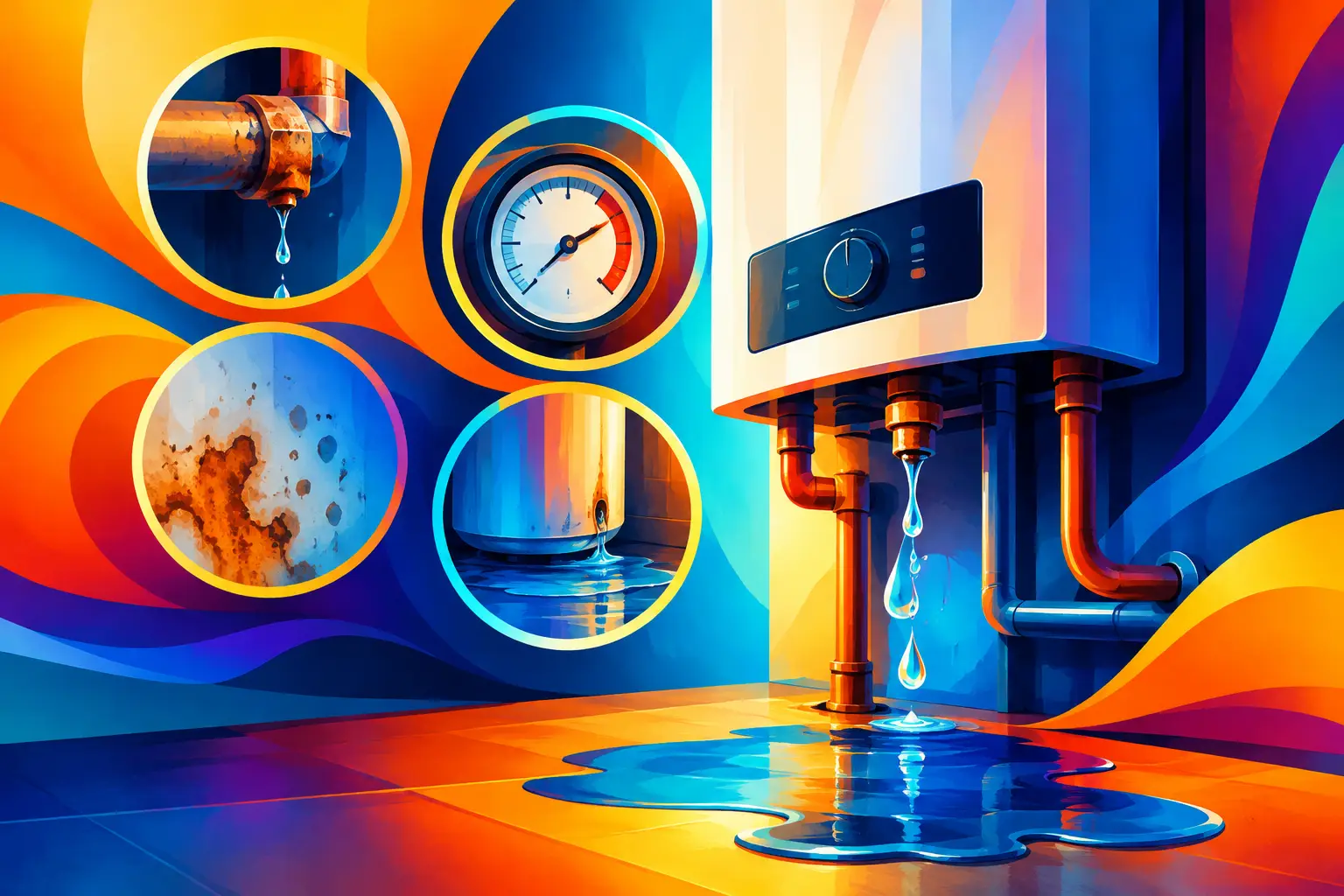
The clearest warning sign is water under the boiler. Place a piece of kitchen roll beneath the appliance only if it is safe and accessible, then check whether it becomes wet. A leak may only show while the heating is running or while the boiler is producing hot water, so the area can look dry between uses.
Try to identify where the water is coming from without removing the boiler cover. A drip from a visible pipe joint may point to a connection issue, while water emerging from the bottom of the casing can indicate an internal fault that needs a qualified engineer.
Boiler pressure keeps falling
Most sealed heating systems have a pressure gauge or digital display. When the system is cold, many boilers operate at around 1 to 1.5 bar, although the correct range depends on the manufacturer and installation. If pressure regularly drops and you find yourself topping it up, water may be escaping somewhere in the system.
The leak is not always beside the boiler. It could be at a radiator valve, under floorboards, near a towel rail or within concealed heating pipework. Repressurising may restore heating temporarily, but it does not cure the cause. Repeatedly topping up can introduce fresh water into the system, which may contribute to corrosion over time.
Pressure rises too high when the heating is on
A pressure reading that climbs sharply as the system warms up can also be a clue. If it approaches the red zone or rises towards 3 bar, the boiler may discharge water through its pressure relief valve. You may then notice dripping from a copper pipe outside, often near an external wall.
This can happen because of an issue with the expansion vessel or pressure relief valve. It is not a repair to attempt at home. Switch off the heating if you are concerned, avoid touching hot pipework and arrange an engineer's visit.
Damp patches, staining or mould near pipework
A slow leak can be more difficult to spot than a puddle. Look for brown or yellow marks on ceilings beneath upstairs radiators, bubbling paint, warped skirting boards, damp patches in airing cupboards, or mould developing where it has not previously been a problem.
These signs do not prove a boiler fault on their own. A roof leak, plumbing issue or condensation may be responsible. But when they appear alongside low boiler pressure or inconsistent heating, the central heating system is worth investigating promptly.
Corrosion around valves, pipes or the boiler
Green staining on copper, white residue around fittings, rust on metal components or crusty marks beneath valves can all suggest a long-standing seep. A tiny leak can evaporate before it forms a puddle, leaving mineral deposits as evidence instead.
Pay particular attention to radiator valves and visible joints near the boiler. Do not tighten fittings yourself, especially around the boiler. Over-tightening a worn connection can make the leak worse or create a new one.
Gurgling radiators and uneven heating
A leaking system can allow pressure to fall and air to enter, leading to gurgling sounds, cold spots at the top of radiators or rooms that take far longer to warm up. These symptoms can also result from trapped air, sludge or poor system balancing, so they are not a diagnosis by themselves.
If the issue returns soon after bleeding radiators or repressurising the boiler, it is sensible to have the system assessed. Treating the symptom without locating the leak can leave your home relying on a boiler that is gradually losing water.
A visible drip from the external copper pipe
Many boilers have a pressure relief discharge pipe that terminates outside. A steady drip, particularly when the heating is running, deserves attention. This pipe should not be confused with the condensate pipe, which is typically plastic and may release water during normal boiler operation.
Never block, cap or alter a discharge pipe. It is a safety component designed to release water if pressure becomes excessive. The key point is to report ongoing discharge so the underlying cause can be diagnosed.
What to do if you suspect a boiler leak
Start by protecting the area. Move stored items, towels or electrical equipment away from the water and, if it can be done safely, catch a small drip with a container. Take a photo of the affected area and make a note of the boiler pressure reading. These details can help an engineer understand whether the leak changes when the boiler runs.
If water is coming from the boiler casing, is close to electrical connections, is flowing quickly, or the pressure is rising unusually high, switch the boiler off at its controls and contact a qualified heating engineer. Do not remove the case, try to seal an internal leak, or continue operating a boiler that is visibly losing water.
For a small leak at a radiator valve, turning off the heating may limit further water loss while you arrange a repair. Avoid isolating or adjusting valves unless you know exactly what they control. The trade-off is simple: a cautious pause in heating is inconvenient, but uncontrolled water can damage floors, cupboards and ceilings.
Why a prompt repair protects more than your boiler
A leaking boiler or heating system may seem manageable if the home remains warm. Over time, however, low pressure can cause boiler lockouts, while moisture can affect plaster, timber and flooring. The boiler may also work less reliably as it repeatedly cycles, loses pressure and needs topping up.
Early investigation is usually more straightforward than waiting for a complete breakdown. An engineer can check visible connections, internal components, the expansion vessel, safety valve and the wider heating circuit before recommending the most appropriate repair. The right solution depends on the location and cause of the leak, rather than the size of the puddle alone.
When to arrange professional help
Arrange a professional inspection if you have topped up pressure more than once, see water beneath the boiler, notice regular discharge from an external copper pipe, or find unexplained dampness near heating pipework. An annual boiler service is also a useful opportunity to identify early signs of wear before they interrupt your comfort.
For homeowners across Hampshire, Wiltshire, West Sussex and Dorset, Gas Worx Southampton provides clear advice and qualified support for boiler faults, servicing and long-term heating care. A local engineer can assess the issue properly and explain the options without unnecessary jargon.
A boiler should quietly deliver dependable heat and hot water, not leave you checking the pressure gauge or mopping up water. If something looks different, trust that instinct and have it checked while the repair is still likely to be simpler.
Want advice for your own home? Speak to one of our experts, it’s free and there’s no obligation.
Speak to an expertMore from the blog
Top Signs Your Boiler Needs Servicing at Home
Spot the top signs your boiler needs servicing, from strange noises to weak heating, and know when to call a qualified engineer at home this winter.
Read More
Boiler Servicing for Landlords Made Clear
Boiler servicing for landlords explained: understand annual checks, gas safety duties, tenant communication and practical steps for reliable rented homes.
Read More
How to Reset Boiler Pressure Safely at Home
Learn how to reset boiler pressure safely, spot warning signs and know when to call a qualified heating engineer for help with your home heating system.
Read More