
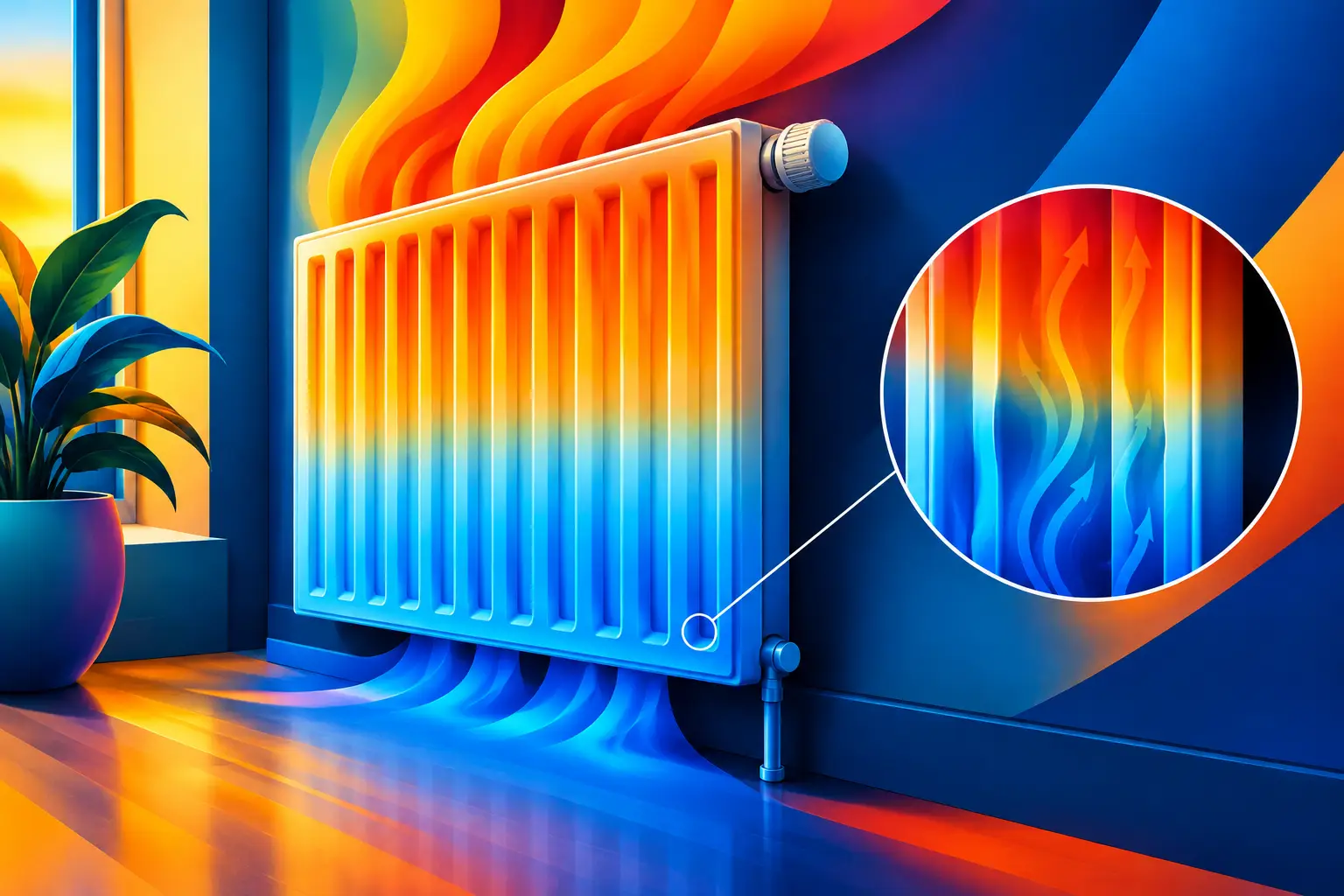
A radiator that is warm across the top but noticeably colder along the bottom is not just an annoyance on a chilly morning. When radiators that are cold at the bottom become a pattern in your home, they can make rooms slower to heat, leave your boiler working harder and increase the chance that a small heating issue develops into a more expensive repair.
The good news is that this symptom often gives a useful clue about what is happening inside your central heating system. It is not always an emergency, and it is not always a sign that you need a new boiler. But it is worth addressing properly rather than simply turning the thermostat up.
Why are radiators cold at the bottom?
The most common cause is a build-up of sludge inside the radiator or pipework. Over time, tiny particles of rust and debris can form in a wet central heating system. These heavier particles settle in the lower channels of a radiator, restricting the flow of hot water where it is needed.
That is why the usual pattern is heat at the top and a cool strip, or a fully cold area, at the bottom. Hot water is still entering the radiator, but sludge is stopping it from circulating evenly through the whole panel.
This differs from a radiator that is cold at the top. Cold areas at the top are more commonly caused by trapped air, which can often be resolved by careful bleeding. Bleeding a radiator that is cold at the bottom may release a little air if it is present, but it will not remove settled sludge.
A partial blockage is the most likely explanation, although it is not the only one. Restricted flow caused by a stuck thermostatic radiator valve, an incorrectly balanced system or an ageing circulation pump can also leave one or more radiators underperforming.
The signs that point to sludge
Sludge does not always announce itself through one cold radiator. Look for a combination of symptoms across the home. Your boiler may be noisier than usual, with kettling or rumbling sounds. Some rooms may take much longer to warm up than others, and you may need to keep the heating on for longer to feel comfortable.
You might also notice discoloured water when a radiator is bled, frequent pressure drops on a sealed system, or a radiator that remains patchy even after its valve has been checked. None of these signs alone proves there is sludge, but together they warrant an engineer’s assessment.
Older systems can be more prone to corrosion and debris, particularly if they have had leaks, repeated top-ups or alterations over the years. That said, newer systems are not immune. Poor water quality, missing inhibitor or an installation issue can affect a system at any age.
Safe checks you can make first
Before arranging a visit, there are a few sensible checks you can carry out without dismantling anything. Start by confirming that your heating is on and has had time to warm up fully. Carefully feel the radiator surface - avoid touching exposed pipework if it is very hot - and compare the temperature at the top, centre and bottom.
Next, check that both radiator valves are open. If you have a thermostatic radiator valve, turn it up temporarily. The valve on the other side is usually a lockshield valve, often hidden under a plastic cap. Do not make large adjustments to lockshield valves unless you understand how the system has been balanced, as changing them can affect heat distribution elsewhere in the property.
If the top of the radiator is cold as well as the bottom, it may be reasonable to bleed it. Switch the heating off first and allow the system to cool. Use a radiator key with a cloth beneath the bleed point, open it slowly and close it as soon as water begins to appear. Never force a stiff bleed screw.
After bleeding, check the pressure gauge on a sealed boiler system. If the pressure is below the manufacturer’s recommended range, the system may need repressurising. If you are unsure how to do this, or the pressure repeatedly falls, it is safer to speak with a qualified heating engineer.
Why repeated bleeding is not the answer
It is easy to assume every cold radiator needs bleeding. In reality, repeated bleeding can become a distraction from the underlying problem. A radiator that is hot at the top and cold at the bottom is usually experiencing poor water flow through its lower section, not an air pocket above the water.
Repeatedly topping up a sealed system is also not a long-term fix. Fresh water introduces oxygen, which can encourage further corrosion inside the system. If your boiler loses pressure regularly, there may be a leak, a faulty expansion vessel or another issue that needs professional diagnosis.
The aim should be to restore proper circulation and protect the system water, rather than treating the same symptom each winter.
How a heating engineer fixes cold radiators
The right remedy depends on the age, condition and layout of your heating system. An engineer will normally begin by checking radiator valves, boiler pressure, pump operation and overall circulation. They may also inspect the system water and identify whether the issue is isolated to one radiator or affecting the property more widely.
For a localised problem, removing and flushing an individual radiator can sometimes be sufficient. This involves isolating it, taking it down safely and clearing debris before refitting it. It is a practical option where one radiator is affected and the rest of the system is heating evenly.
Where several radiators are cold at the bottom, a more thorough clean may be recommended. Powerflushing uses controlled flow and specialist equipment to remove sludge and debris from the system. It can improve circulation and restore heat output, but it is not a one-size-fits-all answer. Very old or compromised systems need careful assessment first, as a strong clean can reveal existing weaknesses such as corroded joints or worn components.
An engineer may also recommend fitting or checking a magnetic filter. This captures magnetic debris before it reaches sensitive boiler components. Following any cleaning work, the system should be refilled with the correct inhibitor to help reduce future corrosion.
Could the boiler be the problem?
A boiler fault is possible, but a radiator cold only at the bottom does not automatically mean the boiler has failed. If hot water is available and other radiators are heating normally, the issue is more likely to sit within the radiator circuit, valves or system water.
However, the boiler should not be ruled out where there are broader warning signs. These include unreliable heating throughout the house, error codes, persistent pressure loss, unusual noises, leaks or a boiler that frequently switches on and off. A qualified Gas Safe registered engineer can identify whether the fault is with the boiler, the controls or the distribution system.
If your boiler is older and repairs are becoming frequent, it may be time to discuss the wider picture. A well-designed replacement boiler, correctly sized for your home and paired with clean pipework and effective controls, can provide more dependable comfort and better efficiency. The same principle applies to heat pump systems: clean, well-balanced emitters are essential for good performance.
Preventing the problem from returning
Once the system is working properly, annual servicing is the best opportunity to spot early signs of reduced circulation, pressure issues and deteriorating components. It also helps keep your boiler operating safely and efficiently.
Avoid unnecessary pressure top-ups, deal with leaks promptly and keep an eye on radiators that take longer to heat than the rest. If work is carried out on the heating system, ask whether inhibitor levels and filtration should be checked. These small measures can protect the investment you have made in your heating.
For homeowners across Hampshire, Wiltshire, West Sussex and Dorset, a local engineer can assess the condition of the whole system rather than offering a quick fix in isolation. Gas Worx Southampton takes that approach because lasting warmth depends on how every part of the system works together.
A cold patch at the bottom of a radiator is your heating system asking for attention. Address it early, and you are far more likely to restore even warmth before the next cold spell makes the problem impossible to ignore.
Want advice for your own home? Speak to one of our experts, it’s free and there’s no obligation.
Speak to an expertMore from the blog

Worcester Bosch Boiler Review for Homeowners
Our Worcester Bosch boiler review explains reliability, efficiency, costs and warranty options, helping South Coast homeowners choose with confidence now.
Read More
Vaillant Boiler Review for UK Homeowners
Our Vaillant boiler review covers reliability, efficiency, warranties and model choice, helping you decide if one suits your own home, needs and budget.
Read More
Are Heat Pumps Noisy? What Homeowners Hear
Are heat pumps noisy? Learn what affects heat pump sound levels, where to place a unit and when noise needs professional attention at home comfortably.
Read More