
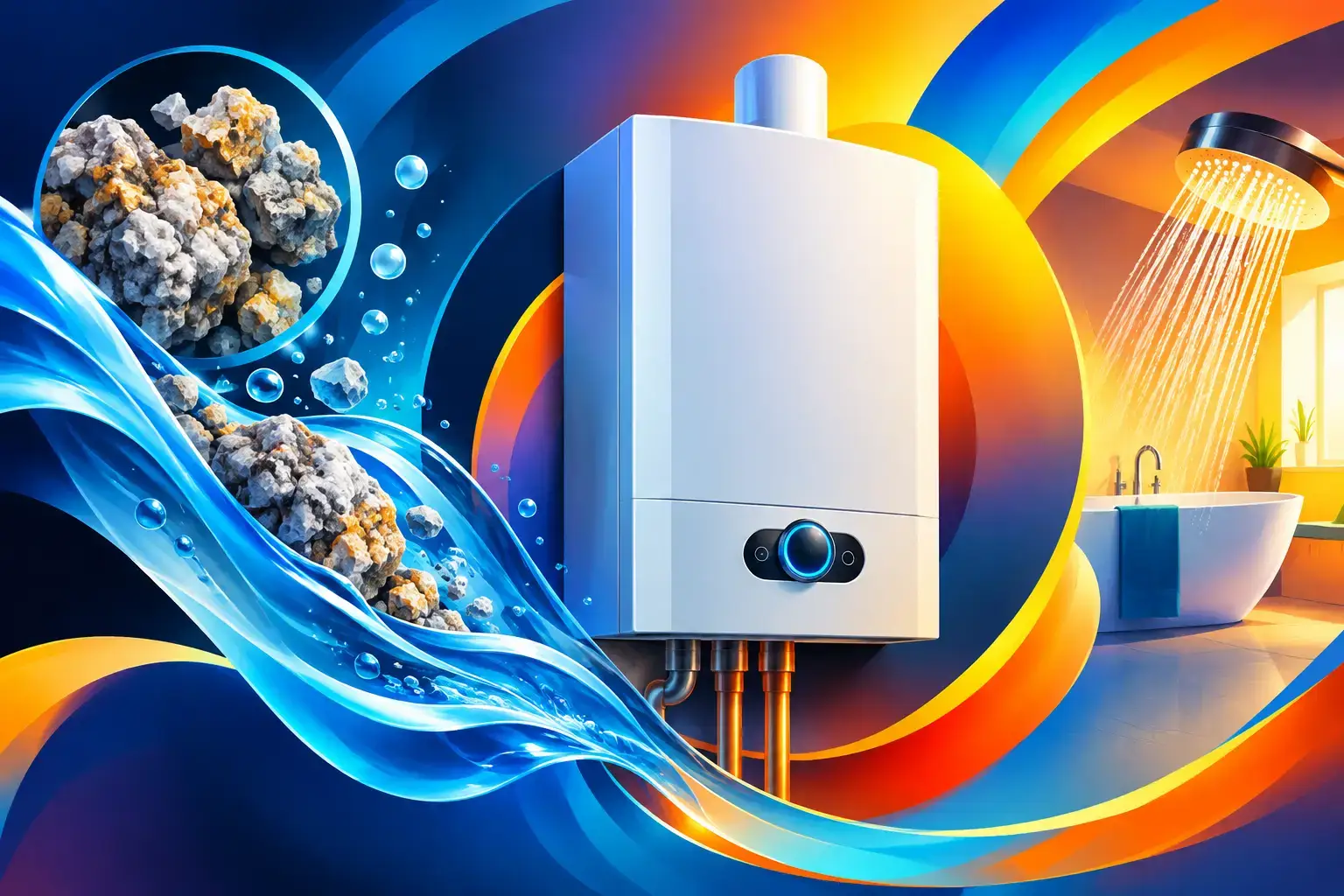
A kettle that furred up within months is a useful warning sign, but the effect of hard water on a boiler is more costly. Limescale can restrict water flow, make hot water temperatures less consistent and place extra strain on components. The best boiler for hard water is not simply the most expensive model or the one with the longest warranty. It is the boiler system that suits your household’s demand, is installed correctly and has sensible protection against scale from day one.
For homeowners across much of the South Coast, hard water is a familiar part of daily life. The good news is that it does not rule out a reliable, efficient boiler. It does mean the detail of the installation and ongoing care matter.
Why hard water affects boilers
Hard water contains higher levels of dissolved minerals, mainly calcium and magnesium. When water is heated, those minerals can form limescale. Inside a combi boiler, this is most likely to affect the domestic hot water side of the appliance, including the plate heat exchanger, where cold mains water is heated for taps and showers.
As scale builds up, it acts as an insulator. The boiler has to work harder to transfer heat into the water, which can reduce efficiency and eventually contribute to faults. You may notice hot water that runs hot and cold, lower pressure at outlets, unusual noises, or a boiler that takes longer to deliver hot water.
Hard water does not automatically damage a boiler, and it should not be treated as a reason to replace a working system prematurely. However, a poorly matched boiler, an undersized system or skipped servicing can turn a manageable issue into an avoidable repair.
The best boiler for hard water depends on your home
There is no one boiler type that is universally best for hard water. The right choice depends on the number of bathrooms, how many people use hot water at the same time, available space and the condition of the existing heating system.
Combi boilers for smaller households
A modern combi boiler provides heating and hot water from one compact unit. It is often an excellent fit for flats, smaller homes and households with one bathroom, particularly where there is no need for a hot water cylinder.
For a home in a hard-water area, the key consideration is the domestic hot water heat exchanger. Scale can develop here because mains water is heated directly. A quality combi boiler, properly sized for the property and supported by appropriate scale control, can still provide years of dependable service. It is particularly important not to choose a boiler based on its heating output alone. Hot water flow rate matters just as much.
System boilers for homes with greater hot water demand
A system boiler works with an unvented hot water cylinder. It is often the better option for larger homes, properties with two or more bathrooms, or families who regularly need hot water at more than one outlet.
Because hot water is stored and supplied from a cylinder, a system boiler can offer stronger performance for busy morning routines. It also gives an installer more scope to design the wider hot water system around local water quality. The cylinder, controls and protection measures all need to be specified carefully, but the result can be a more comfortable and resilient set-up for a high-demand home.
Regular boilers in older properties
A regular boiler may remain the most sensible solution in an older property with a traditional heating layout and cold-water storage tanks. Replacing like for like can sometimes reduce disruption and cost, although upgrading to a modern system should always be considered where practical.
The important point is that boiler type is only one part of the decision. A knowledgeable installer should assess how your household uses hot water rather than pushing every home towards the same solution.
What to look for in a boiler for hard water
Build quality matters, but the most useful features are often those that support maintenance and protect the system over time. Look for a boiler from an established manufacturer with strong UK parts availability and a warranty that is valid when the boiler is installed and serviced correctly.
It is also worth asking about access to components. Plate heat exchangers and other serviceable parts will occasionally need attention in hard-water areas. A boiler that can be serviced efficiently is a better long-term choice than one selected only for its headline warranty.
Correct output is equally important. An oversized boiler can cycle on and off more often than necessary, while an undersized boiler can struggle to meet demand. Neither situation helps efficiency or comfort. A proper home survey should consider heat loss, radiator capacity, insulation, existing pipework and your likely hot water use.
Smart controls can also make a genuine difference. They help your boiler run only when needed and can improve comfort room by room. They will not remove limescale, but they can prevent wasted energy and give you more control over running costs.
Limescale protection is part of the installation
When choosing the best boiler for hard water, ask about the protection around the boiler as well as the appliance itself. An in-line scale reducer or electrolytic device may be appropriate in some homes, while a water softener can reduce the minerals that cause scale throughout the property.
The right approach depends on your water supply, plumbing arrangement and preferences. Water softeners require ongoing salt and are usually installed with a separate untreated drinking-water tap. They are not necessary for every household, but they can be valuable where scale is persistent and affects showers, taps, appliances and the boiler.
For the heating circuit itself, system cleaning and inhibitor are essential. These are separate from hard-water treatment: inhibitor protects the sealed central-heating water against corrosion and sludge, while scale protection addresses the fresh mains water used for hot water. Both have a role in keeping a boiler working as intended.
A magnetic filter is also a sensible addition to most modern boiler installations. It captures metallic debris circulating in the heating system and helps protect components from sludge. It does not treat limescale, but it is part of a well-protected heating system.
Installation quality makes the difference
Even the right boiler can underperform if it is fitted without attention to water quality, system cleanliness and commissioning. Before a replacement boiler is installed, the existing heating system should be assessed and cleaned where needed. This helps remove sludge that could otherwise enter the new boiler from day one.
A thorough installation should include correctly sized pipework, a properly positioned condensate pipe, suitable controls, an expansion vessel check where relevant and a clear explanation of how the system works. The installer should register the warranty, leave the necessary documentation and explain the servicing requirements in plain English.
For homes in Hampshire, Wiltshire, West Sussex or Dorset, local experience can be useful. An engineer who regularly works in hard-water areas will understand the common symptoms, the practical options and the importance of designing the whole system around your property rather than fitting a boiler from a standard template.
How to keep a boiler reliable in a hard-water area
Annual servicing remains the simplest way to catch developing problems early. During a service, an engineer can check combustion, inspect key components, test performance and identify signs that a heat exchanger or other part may need attention. Landlords have legal responsibilities for gas safety, but servicing is just as worthwhile for owner-occupiers who want to protect their investment.
At home, pay attention to changes rather than waiting for a complete loss of hot water. A noticeable fall in shower flow, fluctuating temperatures, repeated error codes or new kettling noises are all reasons to arrange a check. Acting early is often less disruptive and less expensive than waiting for a breakdown.
If you already have a water softener or scale reducer, keep it maintained according to the manufacturer’s instructions. A device that has been forgotten about for years cannot provide the protection you expected.
Choosing with confidence
The best boiler decision starts with an honest assessment of your home, your water use and your local water conditions. A compact combi may be ideal for a one-bathroom home, while a system boiler and cylinder may provide better comfort for a growing family. In either case, limescale protection, clean installation work and annual care are what turn a new boiler into a dependable long-term investment.
If hard water is causing concern, ask for advice that covers the entire heating and hot water system, not just a boiler brochure. Your comfort depends on the details, and the right local engineer will take the time to get them right.
Want advice for your own home? Speak to one of our experts, it’s free and there’s no obligation.
Speak to an expertMore from the blog
Why Radiators Are Cold at the Bottom in Your Home
Radiators cold at bottom can point to sludge, low flow or a valve fault. Learn safe checks, when bleeding helps and when to call a heating engineer today.
Read More
Worcester Bosch Boiler Review for Homeowners
Our Worcester Bosch boiler review explains reliability, efficiency, costs and warranty options, helping South Coast homeowners choose with confidence now.
Read More
Vaillant Boiler Review for UK Homeowners
Our Vaillant boiler review covers reliability, efficiency, warranties and model choice, helping you decide if one suits your own home, needs and budget.
Read More