
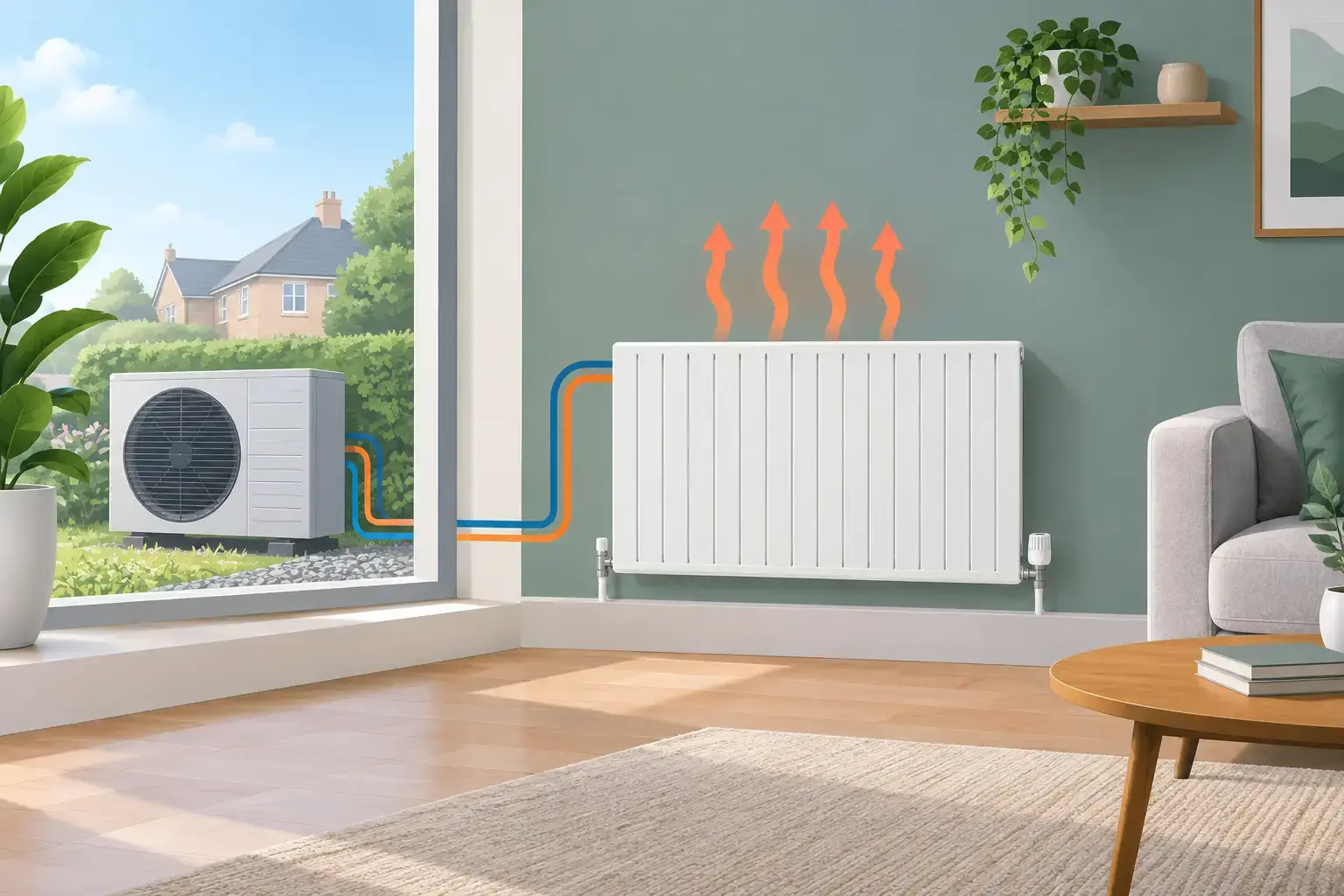
A heat pump can keep a home comfortably warm without radiators feeling scorching hot to the touch. That difference catches many homeowners out. The best heat pump radiator upgrades are not simply about replacing every radiator with the biggest model available. They are about making sure each room receives enough heat at the lower water temperatures where a heat pump works most efficiently.
For homes across the South Coast, the right approach starts with the property itself: its insulation, room sizes, existing pipework and how the household uses heating. A properly designed system should deliver dependable warmth on a cold January morning, not just perform well on paper.
Why radiators matter with a heat pump
Most gas boilers are traditionally set up to send very hot water around a heating system, often at 70°C or more. Heat pumps work differently. They usually perform best when circulating water at a lower flow temperature, commonly around 35°C to 55°C depending on the home and system design.
A radiator gives out less heat when the water running through it is cooler. If an existing radiator was only just large enough when paired with a gas boiler, it may struggle to warm the room at a lower temperature. The answer may be a larger radiator, but it is not always the only answer.
Lower flow temperatures are worthwhile because they can improve a heat pump's efficiency and reduce running costs. The goal is therefore to balance radiator output, comfort and the practical realities of your home, rather than trying to force a heat pump to operate like an old boiler.
Start with a room-by-room heat loss survey
Before choosing radiators, every room should be assessed for its heat loss. This calculation considers the room dimensions, wall construction, glazing, insulation, ventilation and the temperatures you want to maintain. A south-facing lounge with modern double glazing will not need the same output as a north-facing bedroom above an unheated garage.
This step is where good heat pump design begins. It avoids two costly mistakes: fitting oversized radiators everywhere without need, or retaining undersized radiators that leave rooms chilly in winter.
A whole-house heat loss survey also helps determine the most suitable heat pump size. Bigger is not automatically better. An oversized heat pump may cycle on and off more frequently, while an undersized unit can struggle in cold weather. The radiators, pipework, controls and heat pump all need to work as one system.
Consider insulation before changing every emitter
Loft insulation, draught-proofing, cavity wall insulation where suitable, and improved glazing can reduce the amount of heat a room needs. In some homes, those improvements mean fewer radiator replacements are required, or allow the system to run at an even lower temperature.
This does not mean a home must be perfect before it can have a heat pump. Many older properties can be suitable. It simply means fabric improvements should be considered as part of the plan, especially where a room is consistently cold or costly to heat.
The best heat pump radiator upgrades to consider
Larger panel radiators
For many homes, replacing a small single-panel radiator with a larger double-panel, double-convector model is the most straightforward upgrade. The additional surface area releases more heat into the room at lower water temperatures.
Size matters, but placement matters too. A well-sized radiator on an external wall or beneath a window can help counter cold air falling from the glazing. There must also be enough clear space around it for heat to circulate. Boxing in a radiator, covering it with thick furniture or drying washing directly over it will reduce its output.
Larger radiators are often discreet and familiar, making them a practical choice for homeowners who want a low-temperature heating system without changing the look and feel of every room.
Triple-panel radiators where wall space is limited
Where there is not enough wall width for a longer radiator, a thicker triple-panel model can provide extra output in a compact footprint. These can work particularly well in bedrooms, hallways or kitchens where furniture and doors limit available space.
There is a trade-off. Triple-panel radiators project further into the room and can cost more than standard options. They should be selected from proper output figures at the intended flow temperature, not from their rating at the higher temperatures associated with a boiler system.
Low-temperature and fan-assisted radiators
Low-temperature radiators are designed to perform well with cooler water. Some fan-assisted models use small, quiet fans to move air through the unit and increase heat output. This can be useful in rooms with limited wall space, such as a compact extension, a converted loft or a large open-plan kitchen.
Fan-assisted emitters are not necessary in every property. They use a small amount of electricity and may produce a gentle fan sound, so they are best chosen where their higher output genuinely solves a design challenge. For a quiet bedroom with plenty of wall space, a larger conventional radiator may be the better fit.
Heated towel rails and bathroom emitters
Bathrooms deserve special attention because people expect them to feel warm, and towel rails often have a relatively low output. A standard towel rail that worked adequately with a high-temperature boiler may not provide enough warmth on its own with a heat pump.
Depending on the heat loss calculation, the answer could be a larger towel rail, an additional compact radiator or a suitable low-temperature bathroom emitter. A correctly designed bathroom should feel comfortable while still allowing the heat pump to operate efficiently.
Do not overlook valves, pipework and water quality
Radiators are only one part of the upgrade. Thermostatic radiator valves allow individual rooms to be set to sensible temperatures, helping avoid wasted heat in spare bedrooms or rarely used spaces. However, they must be specified and set up in a way that supports the system controls rather than causing restricted flow throughout the house.
Older microbore pipework, poorly balanced circuits or partially blocked radiators can also limit performance. In some cases, sections of pipework need upgrading to carry the higher flow rates a heat pump may require. This is not always necessary, but it should be checked before installation rather than discovered after the system is running.
A system clean and magnetic filter are equally valuable. Sludge and debris reduce circulation, can create cold spots in radiators and put unnecessary strain on equipment. Protecting a new heat pump starts with clean system water and a carefully commissioned installation.
Balancing and controls make the upgrade work
A heat pump generally works best when allowed to run steadily at a lower temperature, rather than heating up quickly and switching off repeatedly. This makes professional balancing essential. Balancing adjusts the flow through each radiator so that rooms heat evenly, including those furthest from the heat pump.
Modern controls can use an outdoor sensor to adjust the heating flow temperature as the weather changes. On a mild day, the system can run cooler. When temperatures fall, it automatically provides more heat. This is often more efficient and comfortable than turning the heating on and off manually.
The best setup depends on the household. A family home occupied throughout the day may benefit from a steady background temperature, while a home that is empty for long working hours may need a different schedule. Good controls should make heating easier to live with, not create another complicated screen to manage.
Should every radiator be replaced?
Not necessarily. Some existing radiators may already be large enough for lower-temperature operation, particularly in well-insulated rooms. Others may need replacing, and a few rooms may need a different type of emitter altogether.
Keeping suitable radiators can reduce disruption and installation costs. Replacing only the radiators identified by room-by-room calculations is usually a more sensible investment than applying a one-size-fits-all rule. It also provides a clearer picture of the expected system performance before work begins.
At Gas Worx Southampton, our approach is to design around the home and the people living in it. That means explaining the choices clearly, checking the details that affect long-term performance and being available after installation as your trusted partner for ongoing care.
Plan for comfort, not just a target temperature
The right radiator upgrades help a heat pump deliver the quiet, even warmth it is designed for. They can improve efficiency, reduce cold rooms and give you greater confidence that your investment will perform through the heating season.
If you are considering a heat pump, ask for a full heat loss assessment and a clear explanation of which radiators need attention and why. A well-designed system should feel simple once it is installed: comfortable rooms, reliable hot water and less worry about how your home will cope when the weather turns cold.
Want advice for your own home? Speak to one of our experts, it’s free and there’s no obligation.
Speak to an expertMore from the blog
Why Radiators Are Cold at the Bottom in Your Home
Radiators cold at bottom can point to sludge, low flow or a valve fault. Learn safe checks, when bleeding helps and when to call a heating engineer today.
Read More
Worcester Bosch Boiler Review for Homeowners
Our Worcester Bosch boiler review explains reliability, efficiency, costs and warranty options, helping South Coast homeowners choose with confidence now.
Read More
Vaillant Boiler Review for UK Homeowners
Our Vaillant boiler review covers reliability, efficiency, warranties and model choice, helping you decide if one suits your own home, needs and budget.
Read More