
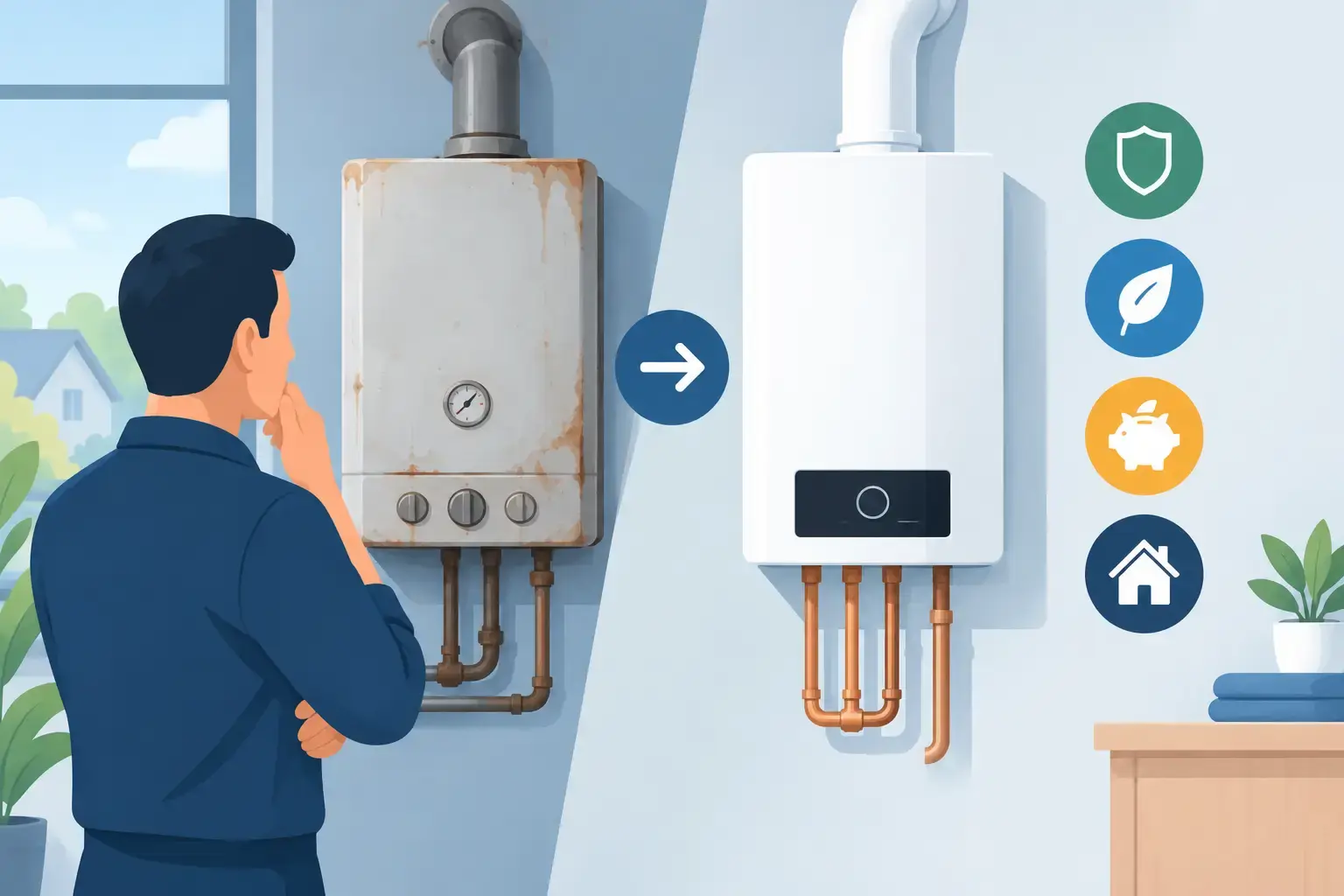
A boiler rarely chooses a convenient moment to fail. It is usually a cold morning, a busy family weekend or just as you notice the hot water has become less reliable. Good boiler replacement timing is about avoiding that pressure. By recognising when a boiler is becoming costly, inefficient or unreliable, you can make a calm, informed choice that protects your comfort and your budget.
For many households, replacing a boiler before it reaches the point of failure also means more time to compare options, plan the installation around your routine and choose a system designed properly for your home.
What is the right boiler replacement timing?
There is no single age at which every boiler must be replaced. A well-maintained boiler can often provide dependable service for 10 to 15 years, and sometimes longer. But age is only part of the picture. The condition of the appliance, the availability of parts, its efficiency, your heating habits and the cost of repairs all matter.
A boiler that is 12 years old and working well after regular annual servicing may have useful life left. Conversely, a younger boiler that repeatedly loses pressure, breaks down or struggles to heat the home deserves closer attention. The best time to replace is often when repair bills and disruption are beginning to outweigh the value of keeping the old system going.
Planning an upgrade in spring or summer can be practical because your home is less dependent on heating. However, a replacement can be installed safely and efficiently at any time of year. If your current boiler is unreliable, waiting for warmer weather may not be worth the risk.
Signs your boiler may be nearing replacement
The most obvious warning sign is frequent breakdowns. One isolated repair does not automatically mean you need a new boiler, particularly if the unit is relatively modern and the fault is straightforward. Repeated call-outs, however, can point to wear across several components rather than one simple issue.
Watch for changes in day-to-day performance too. Radiators that take much longer to warm up, uneven heat around the home, noisy operation, fluctuating hot water temperatures or the need to top up pressure regularly can all indicate a system that needs professional assessment.
Rising gas use is another reason to look closer. Energy prices are always a concern, and an older boiler may use more fuel than a modern high-efficiency model to produce the same level of warmth. Your bills can also be affected by insulation, controls and household habits, so it is sensible not to blame the boiler alone. A qualified engineer can help identify where the energy is going and whether a replacement would make a meaningful difference.
Parts availability matters as well. Manufacturers eventually stop producing components for older models. If a key part is obsolete or expensive to source, a repair may only delay a larger decision. This is often the point at which a planned replacement becomes more sensible than putting more money into a boiler with an uncertain future.
Repair or replace? Look beyond the immediate bill
When a boiler fails, the cheapest immediate option is usually a repair. Sometimes that is exactly the right choice. If the boiler is under ten years old, has been serviced regularly and needs a modest repair, keeping it may offer good value.
The calculation changes when repairs become regular or substantial. Consider what you have spent over the last two or three years, whether the boiler has been dependable through winter, and whether another fault would leave your household without heating or hot water. A large repair on an ageing boiler can be difficult to justify if further components are likely to fail soon after.
It is also worth considering the wider system. A new boiler will perform best when it is correctly sized, paired with suitable controls and installed on a clean, well-balanced heating system. Simply fitting the same output boiler as before is not always the best answer. Household size, the number of bathrooms, hot water demand, insulation improvements and any planned extension can all affect what is suitable.
Do not ignore safety concerns
A boiler that smells unusual, shows scorch marks, leaks, repeatedly shuts down or has a yellow rather than blue flame should be checked without delay. Carbon monoxide has no smell or taste, so an audible carbon monoxide alarm is essential in rooms containing fuel-burning appliances.
Never attempt a gas boiler repair yourself. If you suspect a gas leak, turn off the gas supply if it is safe to do so, open windows and doors, avoid electrical switches or naked flames, and contact the appropriate emergency service. For faults that are not an emergency, a Gas Safe registered engineer can inspect the appliance and explain whether repair or replacement is appropriate.
Safety is not a reason to panic into a purchase. It is a reason to get clear, qualified advice promptly. A trustworthy installer should explain the condition of your existing boiler, the work required and the options available in straightforward terms.
Choosing a replacement that suits your home
A boiler replacement is an opportunity to improve more than the boiler itself. Modern controls can make it easier to heat rooms when they are occupied, manage temperatures accurately and avoid wasting energy. Thermostatic radiator valves, a programmable control and sensible zoning can all contribute to a more comfortable home.
The right boiler type depends on your property and daily routine. A combi boiler is often a good fit for smaller homes with one bathroom and limited space, providing hot water on demand without a separate cylinder. Homes with multiple bathrooms or higher simultaneous hot water demand may be better suited to a system or conventional boiler with a hot water cylinder.
For households considering lower-carbon heating, boiler replacement timing can also be a useful point to explore an air source heat pump, or a longer-term plan that combines heating upgrades with solar panels and battery storage. A heat pump is not a like-for-like boiler swap, and it needs a proper assessment of insulation, heat loss, radiator capacity and available space. For the right home, though, planning early gives you more choices than waiting for an emergency breakdown.
Plan before winter puts you under pressure
A pre-winter boiler service is one of the simplest ways to understand where you stand. It does not guarantee that a boiler will never fail, but it can identify developing issues, confirm safe operation and give you time to plan if the appliance is nearing the end of its useful life.
Keep a note of faults, repair invoices and changes in performance. This helps an engineer see patterns and helps you judge whether money spent on repairs is still proportionate. If you are thinking about selling, renovating or extending your home, factor your heating plans in early rather than treating them as an afterthought.
At Gas Worx Southampton, the focus is on helping homeowners choose a heating solution that fits their property, priorities and budget - with clear advice before, during and after installation.
A considered decision brings lasting comfort
You do not need to replace a boiler simply because it has reached a certain birthday. But if reliability is slipping, repair costs are mounting or your home no longer feels as warm and efficient as it should, arranging an assessment now can prevent a stressful winter emergency. A planned decision gives you the time to choose dependable heating and hot water for the years ahead.
Want advice for your own home? Speak to one of our experts, it’s free and there’s no obligation.
Speak to an expertMore from the blog
Why Radiators Are Cold at the Bottom in Your Home
Radiators cold at bottom can point to sludge, low flow or a valve fault. Learn safe checks, when bleeding helps and when to call a heating engineer today.
Read More
Worcester Bosch Boiler Review for Homeowners
Our Worcester Bosch boiler review explains reliability, efficiency, costs and warranty options, helping South Coast homeowners choose with confidence now.
Read More
Vaillant Boiler Review for UK Homeowners
Our Vaillant boiler review covers reliability, efficiency, warranties and model choice, helping you decide if one suits your own home, needs and budget.
Read More