
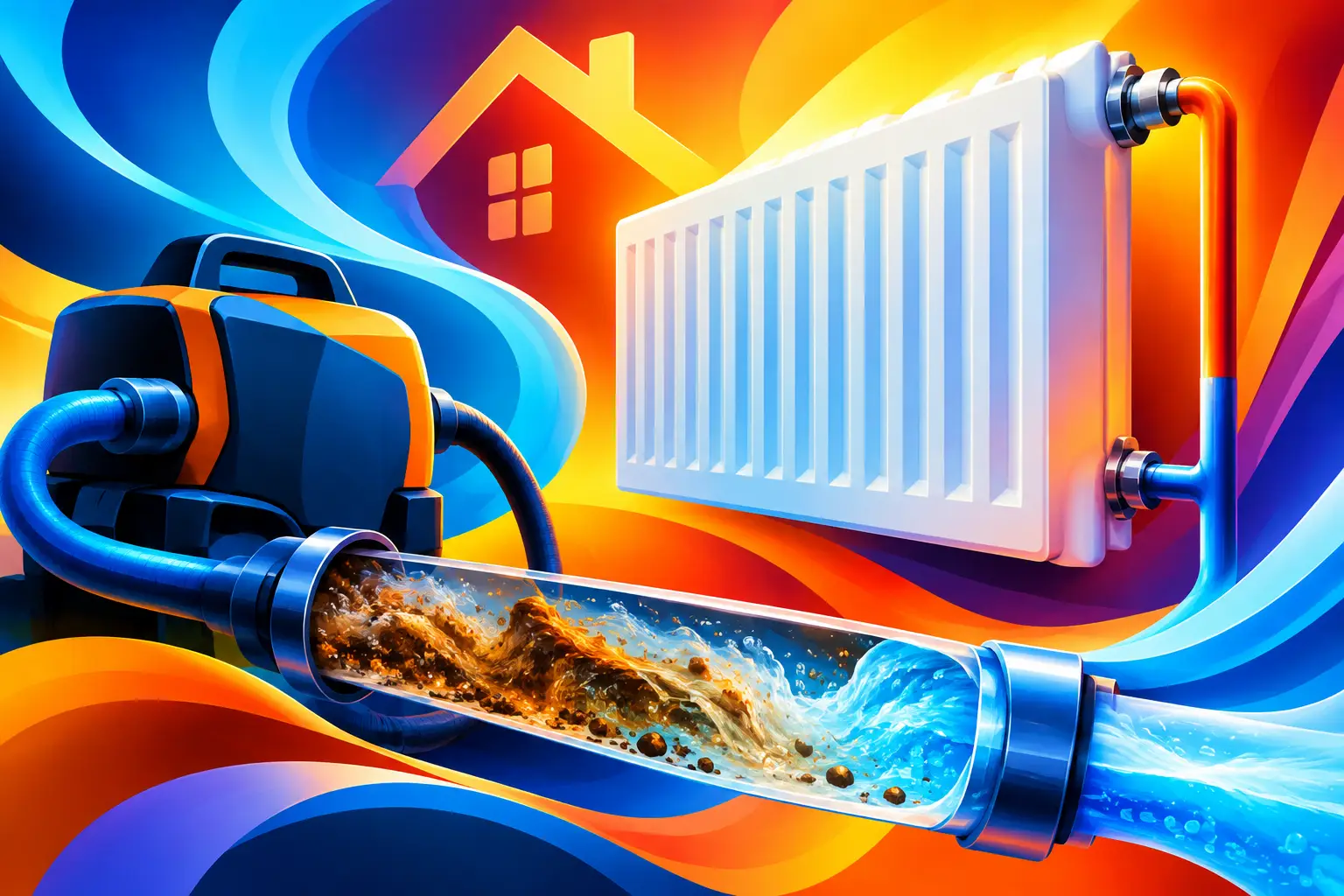
Cold patches at the bottom of a radiator are not always a radiator problem. They are often a sign that sludge, scale or debris is moving around the system and restricting the flow of heating water. This central heating flushing guide explains what flushing does, when it is worthwhile and why the right approach can protect both your comfort and your boiler.
A clean heating system warms your rooms more evenly, helps radiators respond properly and reduces unnecessary strain on the boiler or heat pump. But flushing is not a one-size-fits-all job. The best method depends on the age and condition of your system, the symptoms you are seeing and any previous maintenance.
What does central heating flushing do?
Your central heating system continually circulates water through radiators, pipes and the heat exchanger inside your boiler. Over time, that water can pick up iron oxide sludge from internal corrosion, along with limescale and installation debris. The result is a dark, dirty mixture that settles in low-flow areas, particularly at the bottom of radiators.
A heating flush removes much of this contamination. An engineer circulates clean water, and where appropriate a cleaning chemical, through the system before draining it safely. The system is then refilled, thoroughly vented and treated with inhibitor to help slow future corrosion.
Flushing is about restoring circulation, not simply making the water look cleaner. When water can travel freely, heat is distributed more effectively around the home. That can mean rooms heat up more consistently and your heating appliance does not have to work as hard to reach the temperature set on your controls.
Signs your heating system may need flushing
A single cold radiator can sometimes be resolved by bleeding it, adjusting the lockshield valve or checking the thermostatic radiator valve. If several of the following signs are present, however, it is sensible to arrange a professional assessment:
- Radiators are cold at the bottom but warm at the top.
- Some rooms take much longer to warm up than others.
- The boiler is noisy, kettling or regularly cutting out.
- Radiators need frequent bleeding or the system loses pressure repeatedly.
- Water released from a radiator is dark brown or black.
- A newly fitted boiler or heat pump is being connected to older pipework and radiators.
These symptoms do not automatically mean that a powerflush is required. For example, pressure loss may point to a leak, a faulty expansion vessel or a problem with a pressure relief valve. Boiler noises can also have several causes. A qualified heating engineer should identify the underlying issue before recommending work.
Chemical flush or powerflush: what is the difference?
The word “flush” covers more than one method. Choosing the right one protects the system while giving you a meaningful improvement.
Chemical flush
A chemical flush uses a suitable cleaner added to the heating water. It is circulated through the system to loosen sludge and deposits, then the system is drained and refilled. This may be appropriate for a relatively modern system with mild contamination, or as part of carefully planned maintenance.
It is generally a gentler option, although it can take time. The cleaning product needs to circulate for the period specified by its manufacturer, and the engineer must ensure every part of the system is properly rinsed afterwards.
Powerflush
A powerflush uses a specialist pump to move water and cleaning solution at a high flow rate through the pipework and radiators. It is designed to shift heavier sludge and debris, often using flow reversal and individual radiator attention to clean stubborn areas.
This can be very effective for systems with widespread cold spots, persistent dirty water or a history of poor circulation. It is not simply a matter of connecting a machine and leaving it running. The engineer needs to monitor the process, assess what is coming out of the system and take care around older components.
A powerflush does not normally use dangerously high pressure. The key difference is increased flow, not forcing a fragile system beyond its limits. Even so, older heating systems can contain weak points that have been concealed by sludge. Removing that sludge may reveal an existing leak at a valve, radiator or joint. A good engineer will explain this possibility openly before work begins.
When flushing is especially worthwhile
Flushing is commonly recommended before installing a new boiler onto an existing radiator system. Modern boilers have narrower waterways and sophisticated components that do not respond well to dirty system water. Starting with cleaner pipework helps protect the new appliance and supports its warranty requirements.
The same principle applies to air source heat pumps. Heat pumps operate most effectively when the heating system can circulate water reliably at lower flow temperatures. If radiators are partially blocked with sludge, the home may feel slow to warm and the heat pump may need to work harder than it should. A system clean, combined with the correct radiator and control design, can make a real difference.
It can also be worthwhile where a magnetic filter repeatedly collects large amounts of debris, or where radiators have been added or altered over the years without the system receiving proper cleaning and inhibitor treatment.
What happens during a professional heating flush?
Every property is different, but a properly managed visit starts with checks rather than assumptions. The engineer will look at radiator temperatures, system pressure, boiler performance and visible components such as valves and the magnetic filter, if one is fitted. They may test the heating water to understand its condition.
For a powerflush, a flushing machine is connected to a suitable point on the system. Cleaning solution is introduced where needed, then water is circulated through the system. Individual radiators may be isolated and flushed in turn, allowing the engineer to focus on areas with poor flow. In some cases, radiators may need to be removed for separate cleaning, though this is not always necessary.
Once the water runs clear and the system has been thoroughly rinsed, it is refilled with fresh water. The engineer adds the correct dose of inhibitor, vents radiators, checks the pressure and confirms that heat is reaching each radiator as expected. The final balance of the radiators matters too. Without balancing, the nearest radiators can take most of the flow while rooms further away remain cooler.
The process can take several hours and, for larger or heavily contaminated systems, may take most of a day. It is better to allow enough time for the work than to rush a partial clean that leaves debris behind.
Protecting the system after flushing
A flush is most valuable when it is followed by sensible ongoing care. Inhibitor should remain at the correct concentration in the heating water, as it helps reduce internal corrosion. A magnetic filter can capture circulating metallic debris before it reaches the boiler or heat pump, but it needs cleaning during annual servicing.
Avoid repeatedly topping up a sealed heating system. Each top-up introduces fresh oxygenated water, which can encourage corrosion. If the pressure keeps dropping, ask an engineer to investigate rather than treating regular refilling as normal.
Annual servicing also gives your engineer an opportunity to check system pressure, filters, controls and overall performance. If you have invested in a new boiler, heat pump or radiator upgrades, these routine checks help safeguard that investment for the long term.
Should you flush a central heating system yourself?
Basic tasks such as bleeding a radiator or checking the pressure gauge are manageable for many homeowners when done carefully. A full chemical flush or powerflush is different. It involves chemicals, drainage, system connections and the risk of leaks or poor refilling if the process is not completed correctly.
Trying to flush a system without the right equipment can move debris into the boiler, leave cleaning chemical behind or create an airlock that stops circulation. For gas boilers, any work involving the appliance itself must be completed by a Gas Safe registered engineer.
For homeowners across Hampshire, Wiltshire, West Sussex and Dorset, Gas Worx can assess whether flushing is the right answer or whether a simpler repair, radiator adjustment or control change will offer better value. Your comfort, our commitment means giving clear advice based on the condition of your home, not recommending work you do not need.
If your radiators are slow, uneven or regularly noisy, do not wait for a complete breakdown in the middle of winter. A professional inspection can identify whether the problem is sludge, poor balancing, a faulty component or something else entirely - and help your heating system deliver the dependable warmth your home deserves.
Want advice for your own home? Speak to one of our experts, it’s free and there’s no obligation.
Speak to an expertMore from the blog

The Boiler Ban Timeline for UK Homeowners
Boiler ban timeline explained: what 2025 and 2035 plans mean for your gas boiler, replacement choices and heating upgrades in England for all homeowners.
Read More
Top Signs of Boiler Leaks Every Homeowner Should Know
Know the top signs of boiler leaks, what you can safely check at home and when to call a qualified engineer to protect heating, hot water and property.
Read More
Top Signs Your Boiler Needs Servicing at Home
Spot the top signs your boiler needs servicing, from strange noises to weak heating, and know when to call a qualified engineer at home this winter.
Read More