
A cold bathroom floor on a January morning can make underfloor heating feel like the obvious choice. Equally, a radiator that warms a bedroom quickly after school or work has a practical appeal that should not be overlooked. When weighing up radiator heating versus underfloor heating, the right answer depends on your home, the rooms being improved, your budget and the heat source you use.
For many South Coast homeowners, the best system is not an all-or-nothing decision. A well-designed heating system may use underfloor heating downstairs or in a new extension, with radiators upstairs where fast response and straightforward installation matter most.
Radiator heating versus underfloor heating: the main difference
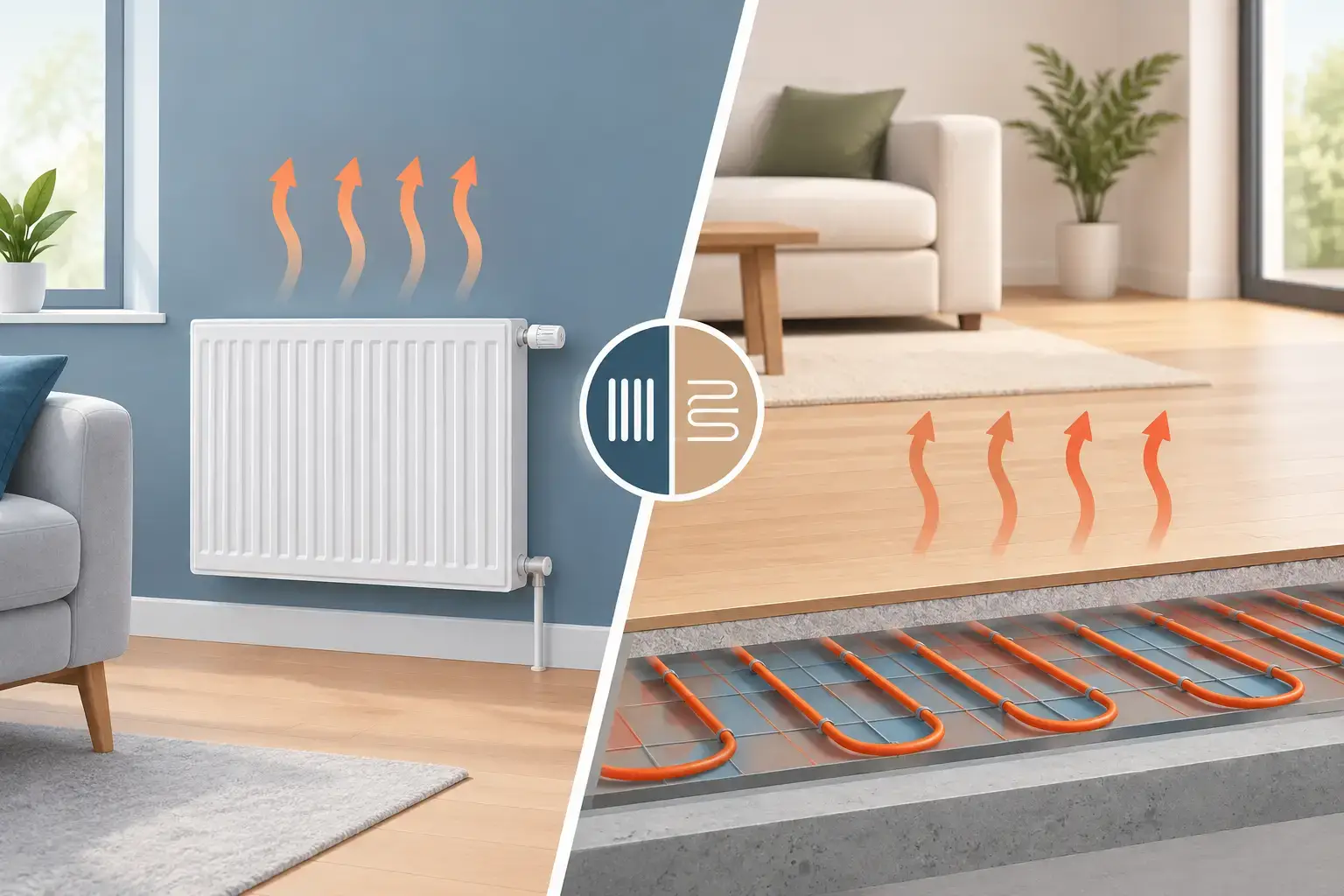
Radiators heat the air around them, creating convection currents that circulate warmth through a room. They operate at a relatively high flow temperature in many traditional boiler systems, although modern oversized radiators can work effectively at lower temperatures too.
Underfloor heating spreads heat across a much larger surface area. Warm water flows through pipework beneath the floor, or electric elements warm the floor finish, which then gently radiates heat upwards. The result is an even, low-level warmth rather than heat concentrated around one wall.
Both approaches can provide a comfortable home. The difference lies in how quickly they respond, how they are installed and how effectively they can operate alongside technologies such as condensing boilers and air source heat pumps.
Comfort: even warmth or quick control?
Underfloor heating is often chosen for the comfort it creates. There are fewer cold spots, no hot radiator surface to work around, and tiles or stone floors feel pleasantly warm underfoot. It is particularly suited to open-plan kitchens, bathrooms, conservatories and ground-floor extensions, where a clear wall layout and consistent background warmth are valuable.
Radiators respond faster. If the temperature drops unexpectedly or you only want to heat a room for a short period, a radiator system can bring the room up to temperature more quickly. This can be useful in bedrooms, spare rooms and houses where family routines vary from day to day.
Underfloor heating has more thermal mass, especially where pipes sit within a screed floor. That means it takes longer to warm up and cool down. It is excellent when run on a planned schedule, but it is not always the best fit for rooms that are used only occasionally.
Efficiency and running costs
A common assumption is that underfloor heating is always cheaper to run. It can be highly efficient, but the full picture is more nuanced.
Wet underfloor heating usually works at lower water temperatures than conventional radiator systems. This suits an air source heat pump very well, as heat pumps operate most efficiently when they do not have to produce very hot water. It can also help a modern condensing boiler run efficiently, provided the system has been designed, balanced and controlled properly.
However, a radiator system can also be an efficient choice. Larger, correctly sized radiators allow lower flow temperatures, making them a strong option for heat pump upgrades without lifting floors throughout the home. Insulation, draught-proofing, heating controls and the way a household uses each room often have as much effect on bills as the type of emitter itself.
Electric underfloor heating deserves separate consideration. It can be simpler to install in a small bathroom, particularly during a refurbishment, but electricity generally costs more per unit than gas. It is usually best reserved for smaller areas, timed carefully and supported by good insulation beneath the floor. A water-based system is normally more economical for heating larger spaces every day.
Installation: what each system involves
Replacing radiators is usually the less disruptive project. Existing pipework may be reused or adapted, radiators can be changed room by room, and the work is often possible without major changes to floors or finishes. It is a sensible route for homeowners replacing an ageing boiler, improving heat pump compatibility or dealing with rooms that never feel warm enough.
Underfloor heating needs more preparation. For a new build, extension or full renovation, it can be incorporated into the floor construction from the outset. In an existing home, installers may use a low-profile system designed to minimise changes to floor height, but doors, skirting boards, kitchen units and floor finishes still need careful consideration.
The flooring matters. Tile and stone conduct heat very effectively. Some engineered wood, vinyl and carpet products are suitable, but each has temperature limits and insulation properties that should be checked before installation. Thick carpets and unsuitable underlay can significantly reduce output.
Good design is essential in either case. Rooms need a proper heat-loss calculation, not a rough estimate based solely on their size. Window area, insulation levels, ceiling height, ventilation and the room’s use all influence the heat required. This is particularly important in older properties across Hampshire, Dorset, Wiltshire and West Sussex, where construction standards can vary greatly from room to room.
Space and appearance
Underfloor heating frees up wall space. That can make a compact kitchen easier to plan, allow furniture to sit wherever it works best and create a cleaner look in a modern extension. There are no visible emitters and no need to decorate around them.
Radiators are not necessarily an eyesore. Modern designs come in slimline, vertical and traditional column styles, and a well-positioned radiator can be an efficient way to counter cold air from windows. They also remain easier to access should a valve, thermostat or individual unit need attention.
For households with young children, underfloor heating removes the concern of hot radiator surfaces. On the other hand, radiators are familiar, easy to control locally and simple to replace if your needs change later.
Which system works best with a heat pump?
Underfloor heating and heat pumps are a natural pairing because both favour low-temperature operation. Where a home is well insulated and the floor is being rebuilt anyway, this combination can deliver excellent comfort and efficient performance.
That does not mean a heat pump requires underfloor heating throughout. Many existing homes are successfully heated by carefully sized radiators, sometimes with selected upgrades in the coldest rooms. The key is ensuring the radiators can deliver enough heat at the lower flow temperatures a heat pump prefers.
A hybrid approach is often the most practical route. Underfloor heating can serve a kitchen-diner or ground-floor extension, while upgraded radiators serve bedrooms and living areas. Separate zones and sensible controls then allow each part of the home to run in the way that suits it best.
Choosing for your home and budget
Choose radiators if you want a lower-disruption upgrade, faster warm-up times or a practical solution for an existing property. They are also a strong choice when you need to improve heating performance without undertaking wider renovation work.
Consider wet underfloor heating when you are building an extension, replacing floors or carrying out a substantial refurbishment. It is particularly attractive for large, regularly used spaces where even warmth and clear walls are priorities.
Before deciding, look beyond the headline installation cost. Ask how the system will be insulated, controlled and maintained, whether your current boiler or planned heat pump is suitable, and what work is needed to achieve the required heat output. The cheapest initial option can be poor value if it leaves a room cold or restricts a future heating upgrade.
A home survey should turn these questions into a clear recommendation rather than a sales pitch. At Gas Worx Southampton, the focus is on designing heating and hot water around the way your household actually lives - from everyday comfort to long-term energy goals.
The most reassuring next step is to assess the rooms you want to improve, your existing system and any renovation plans together. That gives you a heating solution that feels right not just on installation day, but through every winter to come.
Want advice for your own home? Speak to one of our experts, it’s free and there’s no obligation.
Speak to an expertMore from the blog

Why Radiators Are Cold at the Bottom in Your Home
Radiators cold at bottom can point to sludge, low flow or a valve fault. Learn safe checks, when bleeding helps and when to call a heating engineer today.
Read More
Worcester Bosch Boiler Review for Homeowners
Our Worcester Bosch boiler review explains reliability, efficiency, costs and warranty options, helping South Coast homeowners choose with confidence now.
Read More
Vaillant Boiler Review for UK Homeowners
Our Vaillant boiler review covers reliability, efficiency, warranties and model choice, helping you decide if one suits your own home, needs and budget.
Read More